

Washed coffee tastes clean and bright because fermentation strips the fruit away before drying. Natural coffee tastes fruity and wine-like because the cherry dries whole around the bean. Honey-processed coffee lands in between, sweet and syrupy, because part of the fruit stays on during drying. Layer experimental fermentation, like anaerobic tanks or carbonic maceration, on top of any of these, and you get flavors none of the traditional methods produce alone — much like how innovative blends can enrich traditional tea flavors like those showcased in our teas collection. Processing often shapes a cup as much as origin or roast does.
TL;DR:
- Washed coffee produces a bright, clean flavor with less body, but requires significant water use and careful monitoring to avoid over- or under-fermentation.
- Natural processing yields fruitier, syrupy profiles with higher sugar content but carries a higher risk of mold and uneven fermentation in humid climates.
- Honey processing offers a middle ground, with flavor and sweetness level depending on mucilage retention, categorized by color such as red or black honey.
- Experimental fermentation methods like anaerobic tanks and carbonic maceration create unique, wine-like flavors that demand precise control over timing and vessel type.
- Processing choices, especially fermentation duration and method, have a greater impact on cup flavor than origin or roast level, and tasting different processes from the same origin is the best way to learn.
Table of Contents
- What Is Coffee Processing and Why Does It Matter?
- Washed, Natural, and Honey Processing: The Three Core Methods
- What Is Experimental Coffee Fermentation?
- What Are the Steps in Coffee Processing?
- How Does Processing Affect Roasting and Brewing?
- What Does Purelight Coffee Publish About Processing?
- Taste the Difference: Coffees That Show Processing at Work
- Why Processing Deserves as Much Attention as Origin
- Sources
What Is Coffee Processing and Why Does It Matter?
Coffee processing is the set of steps that turns a ripe coffee cherry into a dried, stable green bean ready for roasting. Every method aims for the same finish line: a bean dried to roughly 11 to 12 percent moisture, stable enough to store and ship without molding or over-fermenting in the bag. How you get there is where the flavor gets decided.
A coffee cherry is built in layers. Outside in, you’ve got the skin, the pulp, a sticky layer called mucilage, a parchment shell, and a thin silverskin wrapped directly around the bean. Every processing method is really just a different sequence for removing those layers, and the order and timing changes what ends up in the cup.
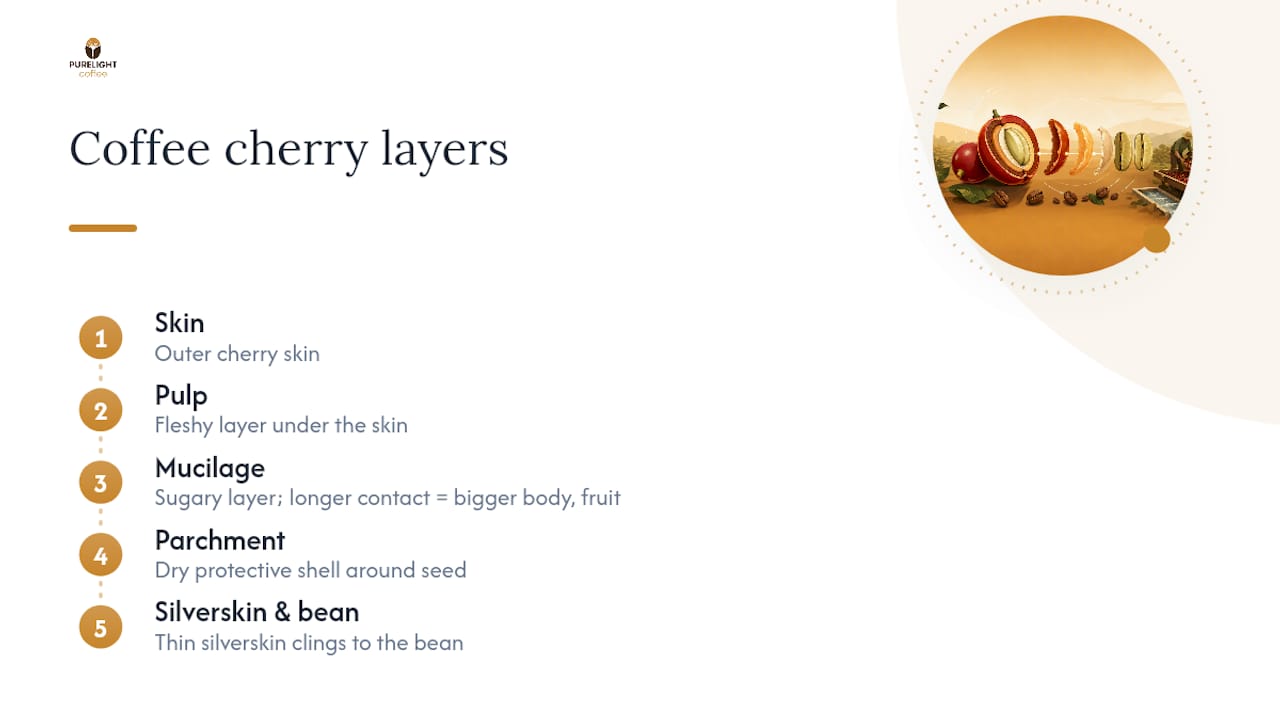
The mucilage layer is the real flavor lever. It’s loaded with sugars, and how long it stays in contact with the bean, and what breaks it down (water-based fermentation, ambient microbes, or a mechanical device), determines how much sweetness, fruit character, and acidity migrate into the seed. Longer contact tends to mean bigger body and more fruit. Less contact tends to mean a cleaner, more acid-forward cup. That single variable is why the same coffee variety grown on the same hillside can taste like two different coffees depending on how it’s processed.
Washed, Natural, and Honey Processing: The Three Core Methods
Every specialty coffee you’ve had traces back to one of three foundational routes, according to Coffee Studies. Each one handles the mucilage differently, and that difference is audible in the cup.
Washed (wet) process. Cherries get pulped the same day they’re picked, which strips off the skin and most of the pulp. What’s left, the mucilage-coated bean, sits in fermentation tanks anywhere from a few hours to two days while natural enzymes and microbes break down the sticky layer. Producers then wash the beans clean and move them to dry. The result is the cup most people associate with “clean” coffee: bright acidity, clear varietal character, less body. The tradeoff is water. Traditional washing can use several liters per kilogram of cherry, and fermentation has to be watched closely. Go too long and you get vinegary, over-fermented notes; stop too early and mucilage residue leaves a muddy, inconsistent finish.
Natural (dry) process. No pulping at all. Whole cherries go straight onto drying beds or patios and stay there, fruit and all, until the moisture drops to target and the dried husk can be hulled off. Sugars from the pulp diffuse straight into the bean over those two to four weeks, producing heavy body, syrupy sweetness, and fruit-forward flavors that can run toward berry, tropical fruit, or fermented wine notes. The risk runs the other direction from washed coffee: whole cherries drying slowly, especially in humid climates, are far more prone to mold and uneven fermentation than pulped beans.
Honey / pulped natural. This is the middle path. The skin comes off like a washed coffee, but instead of fermenting and washing away the mucilage, producers leave some or all of it on the bean during drying. The amount retained gets a color name, white, yellow, red, or black, running from least mucilage and fastest drying to most mucilage and slowest. Black honey can take noticeably longer to dry than white honey and produces a richer, sweeter cup, according to the general processing literature. These categories aren’t separate methods so much as a dial, and reading a bag’s label is really reading where on that dial the producer landed.
What to check on a bag or tasting sheet:
- The word “washed” or “wet process” signals bright acidity and a lighter body.
- “Natural” or “dry process” signals fruit-forward, heavier, sometimes funky flavors.
- “Honey” plus a color (yellow honey, red honey) signals a sweetness and body level between the two extremes.
- Any mention of “anaerobic,” “carbonic maceration,” or “extended fermentation” signals an added layer on top of whichever base method is listed.
What Is Experimental Coffee Fermentation?
Anaerobic fermentation and carbonic maceration are borrowed straight from winemaking, and both work by starving the fermentation of oxygen. Cherries or pulped beans go into a sealed tank right after harvest, which shifts which microbes dominate the fermentation and changes the flavor compounds those microbes produce. The results tend toward fruit-forward, wine-like, sometimes downright funky profiles that push past what a standard washed or natural process can deliver on its own, per Coffee Studies.
Inoculated fermentation adds a specific yeast or bacterial culture to the tank instead of relying on whatever microbes happen to be present. It’s more reproducible than open fermentation, but it still demands strict sanitation and precise timing. A few extra hours in the tank, or a contaminated vessel, can swing a batch from vibrant to off-putting.
- Anaerobic and carbonic maceration: sealed tanks, low oxygen, wine-like sensory results.
- Inoculated fermentation: added cultures for repeatable outcomes, batch to batch.
- Extended and thermal-shock fermentations: longer or temperature-manipulated ferments chasing more intense fruit and funk.
- All of them raise the bar for monitoring, since a small timing error shows up directly in the cup.
Pro Tip: If a bag lists a fermentation time and vessel type (say, “72-hour anaerobic, steel tank”), that level of detail is usually a good sign the producer is controlling the process tightly, not just chasing a trend.
What Are the Steps in Coffee Processing?
However a producer ultimately processes their coffee, the sequence runs through the same checkpoints, and each one is a place where quality gets made or lost.
- Harvest. Pickers select only ripe, red cherries and sort out under and overripe fruit along with debris. Cherries that go into the same batch at different ripeness stages ferment unevenly, which shows up later as inconsistent cup flavor.
- Pulping or demucilaging. A pulper strips the skin, while a mechanical demucilager also scrubs off most of the mucilage without a water-based ferment. Demucilagers can cut water use to roughly half a liter per kilogram of fresh cherry, a major efficiency gain over traditional washing, according to the FAO’s coffee processing guidance.
- Fermentation. Timing and hygiene are everything here. Clean tanks and consistent temperature keep fermentation predictable; dirty equipment or inconsistent timing produces the sour or vinegary notes that signal over-fermentation, while cloudy, uncleaned mucilage residue signals under-fermentation.
- Drying. Raised beds with frequent turning cut down on mold risk and rewetting compared to ground-level patios. Drying times vary sharply by method and climate: washed parchment coffee often dries in about nine to ten days, while whole natural cherries can take two to four weeks, per the same FAO field guidance.
- Hulling, sorting, and storage. Once beans hit target moisture, hulling removes the parchment or dried husk. Sorting by density and size catches defects before export, and moisture checks at this stage confirm the bean is stable enough for long-term storage without molding in transit.
How Does Processing Affect Roasting and Brewing?
Washed coffees tend to run denser and lower in residual sugar than naturals, which means they can handle a slightly higher roast temperature before they scorch. Natural and honey coffees carry more sugar into the roast, so they caramelize faster and can tip into bitterness or ash flavor if pushed too dark. That’s part of why you’ll see more naturals sold as light roasts. A light roast approach protects the fruit character that heavier roasting would burn off.
At the brewer, a washed coffee’s clean acidity usually holds up fine at standard grind and ratio settings. Fruit-forward naturals and honey coffees often taste better with a slightly coarser grind and shorter extraction, which tones down bitterness and lets the fruit sweetness lead. If you want to actually hear the difference processing makes, brew a washed and a natural from the same region side by side at the same ratio. The gap in acidity and body will be obvious within the first sip.
What Does Purelight Coffee Publish About Processing?
Purelight shares origin, processing, altitude, varietal and cupping information supplied by our roasting partner, where available. Scores listed for blends belong to their component coffees. Coffee is roasted by our partner in Bend, Oregon. Lab reports cover only their named samples and tests; see Sourcing & Testing for details and Shipping Policy for delivery estimates.
Taste the Difference: Coffees That Show Processing at Work
Reading about washed versus natural processing only gets you so far. The fastest way to actually understand it is to brew two coffees processed differently, back to back, from the same shelf. Colombia Dawn (Single Origin) is washed, sourced from Huila and Cauca, and cupped at 84, a solid example of the bright, clean profile washing produces. If you want a blend that shows how pulped natural character rounds out a roast, Cascades (Medium-Dark House Blend) leans into fuller body and deeper sweetness at a medium-dark roast. And if decaf is where you’re starting, Trapper Peak Decaf is an Indonesian coffee run through the Swiss Water Process, cupped at 83, proving decaffeination doesn’t have to flatten the cup.

Why Processing Deserves as Much Attention as Origin
Origin and varietal get most of the marketing language on a coffee bag, but processing is the variable that decides whether that origin’s potential actually shows up in the cup. I’d argue it’s underrated precisely because it’s less romantic than a farm story. A fermentation tank sitting for 36 hours doesn’t photograph as well as a misty hillside, but it does more to your final cup than a few hundred feet of elevation.
If you want to understand this for yourself, buy a washed and a natural coffee from a similar origin and brew them the same way, same grind, same ratio, same water temperature. The difference will tell you more about processing in five minutes than any explainer can. For a deeper look at how mucilage retention changes flavor, the honey processing breakdown is worth a read, and every Purelight Coffee product page lists the process behind the beans in your bag.
— Shawn Lee
Sources
- Coffee Processing Methods — Coffee Studies
- Arabica coffee manual for Lao PDR — FAO
- Coffee production — Wikipedia
Recommended
- What Honey Processed Coffee Is and Why It Tastes That Way
- Farm to Cup Coffee: What Traceability Really Means
- Small-Batch Coffee: What Home Brewers Need to Know
This article was produced by the Purelight Coffee team. It’s general coffee and brewing information, not professional or medical advice - results will vary with your equipment, water, and beans.


