Hand pouring water over light roast coffee grounds
Coffee Guides

Light Roast Coffee: What It Is and Why Drinkers Choose It

Light roast coffee is any bean pulled from the roaster at or just after first crack, typically between 356°F and 401°F, before caramelization and oil migration flatten out origin flavor. Drinkers choose it for brightness, clarity, and the ability to taste where the coffee actually came from, whether that’s a floral Ethiopian lot or a citrus Colombian one. Compared to darker roasts, light roast coffee flavor leans toward tea-like, fruit-forward, and acidic rather than smoky or bittersweet.

If you’re new to buying it, two habits matter more than anything else:

  • Weigh your beans on a scale instead of scooping, since light roast beans are denser than dark roast beans of the same volume.
  • Check the bag for a roast date and buy coffee roasted within the past two to four weeks.

Key Takeaways

Light roast coffee delivers origin-forward flavor and slightly more caffeine by weight, but it demands precise grind, temperature, and freshness management to taste its best.

Point Details
Roast marker to know Light roast is pulled at or just after first crack, roughly 356°F to 401°F.
Weigh, don’t scoop Denser light roast beans mean volume scoops under measure actual coffee mass.
Match brew method to roast Pour-over, Chemex, and AeroPress extract light roast clarity better than immersion brewers built for dark roast.
Freshness window is tighter Buy within two to four weeks of the roast date since fewer roast flavors mask staling.
Where to start buying Purelight Coffee’s High Lakes Light House Blend and Light pods offer roast-date transparency and small-batch sourcing.

Table of Contents

What Makes a Coffee “Light Roast”?

Roasters classify coffee by how far past first crack they carry it, and light roast is the earliest stopping point that still counts as fully developed coffee. First crack happens when trapped moisture and pressure cause the bean to audibly pop, usually between 356°F and 401°F depending on the roaster and bean density. Pull the batch here and you preserve most of the bean’s original acids and delicate aromatic compounds. Push past it toward second crack, and heat starts converting those acids and sugars into the caramelized, smoky flavors associated with darker roasts.

That earlier drop point changes what the coffee physically looks and feels like:

  • Color runs light brown, closer to cinnamon than chocolate.
  • The bean surface stays dry with no visible oil sheen.
  • Density stays higher because less mass has cooked off during roasting.
  • The bean retains more of its original chlorogenic acids, which is where a lot of that brightness comes from.

What Does Light Roast Coffee Actually Taste Like?

Expect tea-like body, higher perceived acidity, and flavors that trace directly back to where the coffee grew. Ethiopian light roasts often show jasmine, bergamot, or blueberry notes, while Colombian and Central American lots tend toward stone fruit, citrus, or brown sugar. This is the core appeal behind light roast coffee flavor: the roast gets out of the way and lets the growing region speak.

Processing method shifts those notes further. Washed coffees, where the fruit is removed before drying, tend to taste cleaner and more citrus or floral. Natural process coffees, dried with the fruit still on, push toward berry, wine, and fermented fruit notes because sugars from the cherry soak into the bean during drying. Honey-processed coffees sit in between, usually adding a rounder sweetness without the funk of a full natural.

One clarification worth making: “acidity” in coffee tasting doesn’t mean sour. It refers to a bright, lively quality, the same sensation you get biting into a green apple versus a banana. Sourness is a flaw, usually from under extraction. Acidity done right is what makes a light roast taste alive instead of flat.

Pro Tip: If a light roast tastes sharp or vinegary rather than bright, that’s usually an extraction problem, not a bean problem. Try a coarser grind or slightly longer brew time before writing off the coffee.

Light Roast vs. Dark Roast: What Actually Changes in the Cup

The biggest shift between light roast and dark roast coffee is where the flavor comes from. Light roasts showcase the bean’s origin. Dark roasts showcase the roast itself, layering in bittersweet, smoky, and caramelized notes that can mask where the coffee was grown. Neither is objectively better; they’re built for different goals. Specialty roasters generally agree that light roasts suit drinkers chasing clarity and delicacy, while darker roasts hold up better in milk-based drinks, since a bold roast flavor cuts through milk in a way subtler origin notes can’t.

On caffeine, the popular narrative that dark roast has more punch gets it backward. Light roast coffee contains slightly more caffeine by weight than dark roast, because roasting burns off mass, and caffeine degrades only marginally with heat. The gap is small, roughly 5 to 10 percent, and easily swamped by how much coffee you actually use.

Extraction behavior also differs:

  • Light roasts are denser and less soluble, so they often need a finer grind and hotter water to extract fully.
  • Dark roasts are more porous and give up flavor faster, which is why they’re more forgiving of coarser grinds.
  • Body tends to run lighter and more tea-like in light roasts, fuller and heavier in dark roasts.

Best Brewing Methods for Light Roast Coffee

Filter methods that let water move slowly and evenly through the grounds do light roasts the most justice. Pour-over rigs like the V60 and Chemex, along with the AeroPress, consistently draw out the clarity that makes light roast worth buying in the first place.

  1. Pour-over (V60 or Chemex). Use a 1:16 ratio, water around 200°F to 205°F, and a medium-fine grind. Bloom with twice the coffee’s weight in water for 30 to 45 seconds before your main pour.
  2. AeroPress. Use a 1:15 ratio, water around 195°F to 200°F, and a slightly finer grind than pour-over. A 1:30 to 2:00 minute steep with a gentle stir before pressing gives good extraction without bitterness.
  3. Paper-filter drip machines. Stick to a 1:16 to 1:17 ratio and a medium grind. If your machine doesn’t hit at least 195°F, preheat the carafe and grind slightly finer to compensate.

The reason light roasts often ask for hotter water and a finer grind than dark roasts comes down to density and solubility. A denser bean releases its flavor more slowly, so you need more heat and surface area to pull a balanced cup in the same brew window.

Pro Tip: If your pour-over tastes thin even after a longer brew, don’t keep extending the time indefinitely. Grind finer first. Time and temperature can only do so much when the particle size is the actual bottleneck.

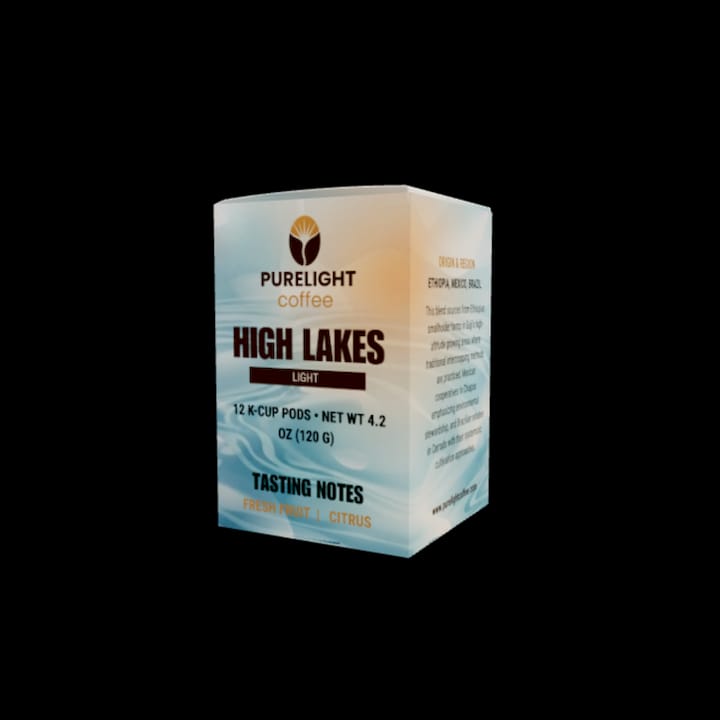
High Lakes(Light) - 12 PODS

Fixing a Light Roast That Tastes Off

Most bad cups trace back to one of three variables: grind, temperature, or ratio. Work through these in order before you assume the beans themselves are the problem.

  1. Cup tastes sour or thin. This points to under extraction. Grind finer, extend brew time slightly, or raise water temperature toward 205°F.
  2. Cup tastes bitter or harsh. This usually means over extraction. Grind coarser or shorten your brew time.
  3. Cup tastes weak regardless of grind. Check your dose. Light roast beans are denser than dark roast beans, so scooping instead of weighing can shortchange you by a meaningful margin since the same scoop holds more actual coffee mass when beans are denser.
  4. Extraction feels inconsistent between brews. Add a deliberate bloom (30 to 45 seconds) and a gentle stir or swirl right after pouring. This knocks loose trapped carbon dioxide and evens out water contact.

Weighing solves more problems than any grind adjustment. A kitchen scale accurate to 0.1 grams removes the guesswork that volume measuring introduces, and it’s the difference between a repeatable recipe and a new experiment every morning.

How to Buy and Store Light Roast Coffee

Freshness matters more with light roast coffee than almost any other category, because there are fewer heavy roast flavors to hide staleness once it sets in. Roast date and small-batch roasting have an outsized effect on how a light roast actually tastes in the cup, so treat the date on the bag as your first filter, not an afterthought.

A few buying habits worth building:

  • Buy whole bean, not pre-ground, and grind right before brewing.
  • Look for a roast date, not just a “best by” date. Coffee roasted within the last two to four weeks is the sweet spot for light roasts.
  • Choose single-origin bags like a Brazil Classic single-origin or Colombia Dawn single-origin when you want to taste terroir clearly, and blends when you want a more balanced everyday cup.
  • Store beans in an airtight container, away from light and heat, and skip the freezer unless you’re storing more than a few weeks’ supply.
  • Pods and instant formats trade some freshness control for convenience. They’re fine for travel or a quick fix, but whole bean will always give a light roast more room to shine.

Myths About Light Roast Coffee, and What the Evidence Says

The biggest myth is that dark roast automatically means stronger caffeine. It doesn’t. As covered above, light roast actually edges out dark roast in caffeine by weight, with the difference sitting around 5 to 10 percent, largely because darker roasting burns off more bean mass while barely touching caffeine content.

A second myth conflates roast level with strength or intensity. “Strong” usually describes bitterness or roast flavor, not caffeine, and a well-brewed light roast can taste plenty intense in acidity even though it reads as lighter on the palate.

On health, research indicates light roasts tend to retain more polyphenols, plant compounds that break down with extended heat exposure. This doesn’t make light roast a health food, but it’s a real, measurable difference between roast levels. If acidity bothers your stomach, cold brew or a slightly darker roast can ease that without giving up coffee altogether.

Myths About Light Roast Coffee, and What the Evidence Says — overview diagram

Who’s Behind This Guide

This guide comes from Shawn Lee, whose editorial focus centers on specialty coffee sourcing, roast development, and brewing methodology. Purelight Coffee backs that expertise with its own practices: small-batch roasting done in-house in Oregon, roast dates printed on every bag, third-party purity and freshness verification, and a club membership built around keeping subscribers stocked with recently roasted coffee rather than warehouse-aged stock.

How Altitude and Terroir Shape a Light Roast

Elevation changes how a coffee cherry develops, and that shows up directly in the cup once the bean is roasted light enough to let it through. Cherries grown at higher altitude, generally above 4,000 feet, mature more slowly because cooler temperatures slow down the plant’s metabolism. That slower maturation gives the bean more time to develop complex sugars and acids, which is why high-altitude coffees, common in regions like Ethiopia’s Yirgacheffe or Colombia’s Huila, tend to show brighter acidity and more layered fruit or floral notes than low-altitude coffees.

Terroir adds soil composition, rainfall patterns, and shade cover into the mix. Volcanic soil, found across much of Central America and parts of Indonesia, tends to produce coffee with a distinct mineral quality and syrupy body. Rainfall timing affects cherry size and sugar concentration, and shade grown coffee, common in traditional Ethiopian farming, often ripens slower and develops more delicate aromatics than sun grown coffee from the same region.

None of this matters much in a dark roast, since heavy roasting flattens these distinctions into caramelized, roast-driven flavor. Light roasting is what preserves them, which is exactly why terroir and altitude get discussed so much more in specialty coffee circles than in mainstream coffee marketing. Buying single-origin, knowing the elevation on the bag, and choosing a light roast are really three parts of the same decision if origin character is what you’re after.

How I Actually Brew Light Roast at Home

My daily setup is a V60, 1:16 ratio, water at 202°F, medium fine grind. If you’re new to light roast, start there and adjust grind before anything else. It’s the single biggest lever you control.

— Shawn Lee

Try Purelight Coffee’s Light Roast Lineup

Purelight Coffee builds its light roasts around the two things that actually matter for freshness: recent roast dates and small batches, so you’re never buying coffee that sat in a warehouse for months before reaching your kitchen. The High Lakes Light House Blend in whole bean gives you full control over grind size for pour-over or AeroPress, while the High Lakes Light pods deliver the same roast profile with zero setup on busy mornings.

High Lakes(Light) - 12 PODS

Every bag and pod carries its roast date and sourcing details, backed by third-party purity verification and Purelight’s own testing. If you’re building out a full roast-level rotation rather than committing to light roast exclusively, the Cascades Dark House Blend covers the milk-drink, bold-flavor end of the spectrum. For readers who want to stop thinking about reorder timing altogether, Purelight’s club membership ships fresh roasts on a schedule, which solves the freshness problem at the root instead of leaving it up to memory. Order the High Lakes Light House Blend today and taste the difference a genuine roast date makes.

Sources

Previous
A Moka Pot Makes Espresso-Style Coffee Without the Machine
Next
Farm to Cup Coffee: What Traceability Really Means