

Choose French press if you want a bold, full-bodied cup and don’t mind a little sediment in the bottom of the mug. Choose pour-over if you want a clean, bright cup that shows off what a specific origin actually tastes like. The difference comes down to filtration, not skill or snobbery, and both methods are covered below with exact ratios, times, and fixes for when a cup goes wrong.
TL;DR:
- French press produces a heavier, oilier cup with more sediment, best suited for medium and dark roasts like Broken Top pods, but can lead to muddiness if fines don’t settle.
- Pour-over offers a cleaner, brighter cup ideal for light and single-origin roasts such as Ethiopia Prime, with precise control over pour and extraction time.
- The main taste difference stems from filtration: metal mesh passes oils and fines, creating weight and richness, while paper filters trap these, highlighting clarity and aromatics.
- Using a burr grinder and weighing water enhances consistency in either method, with French press costing around $20 to $40 and pour-over requiring a $55 to $95 setup with filters and kettle.
- Cafestol levels are higher in French press coffee due to metal filters, which may impact cholesterol for sensitive drinkers, making paper-filtered pour-over preferable for health reasons.
Table of Contents
- French Press vs Pour Over: The Quick Comparison
- Why Does Filtration Change the Taste So Much?
- How Do You Actually Brew Each One?
- What Will Equipment and Setup Actually Cost You?
- Does the Brewing Method Affect Your Health?
- How Do You Choose Between Them?
- Which Purelight Coffee Bags Fit Each Brewing Style?
- A Coffee Drinker’s Honest Take on Owning Both
- Try Both Without Overthinking the Gear
- Sources
French Press vs Pour Over: The Quick Comparison
Both methods can produce excellent coffee. They just get there differently, and the gap shows up in nearly every part of the process.
- Body and clarity: French press gives you a heavier, oilier cup with visible fines. Pour-over gives you a lighter, cleaner cup that reads more like tea in terms of texture.
- Grind: French press wants coarse, roughly the size of sea salt. Pour-over wants medium-fine, closer to granulated sugar.
- Ratio: French press typically runs 1:15 coffee to water. Pour-over starts around 1:16.
- Time: French press steeps for about four minutes. Pour-over brews involve a few minutes of active pouring, including bloom time.
- Gear: French press needs the press and a kettle. Pour-over adds a dripper, filters, and ideally a gooseneck kettle for pour control.
- Cleanup: French press means dumping wet grounds and rinsing a mesh filter. Pour-over means tossing a paper filter, no scrubbing required.
- Best roast match: French press suits medium and dark roasts, including something like Broken Top (Medium Roast) pods for a fast, no-fuss version. Pour-over suits light and light-medium roasts, where a single-origin bean like Ethiopia Prime (Single Origin) shows its floral and fruit notes clearly.
Neither method wins outright. They’re built for different outcomes, and the gear list above is really the same short shopping trip either way, just with different priorities.
Why Does Filtration Change the Taste So Much?
French press uses a metal mesh, which lets coffee oils and tiny particles called fines pass straight into your cup. That’s what gives it weight on the tongue and a slightly chewy, cocoa-leaning finish, especially with darker roasts. Pour-over uses paper, which traps those same oils and fines. What’s left is a lighter-bodied cup where acidity and aromatics come through cleanly instead of getting buried under sediment.
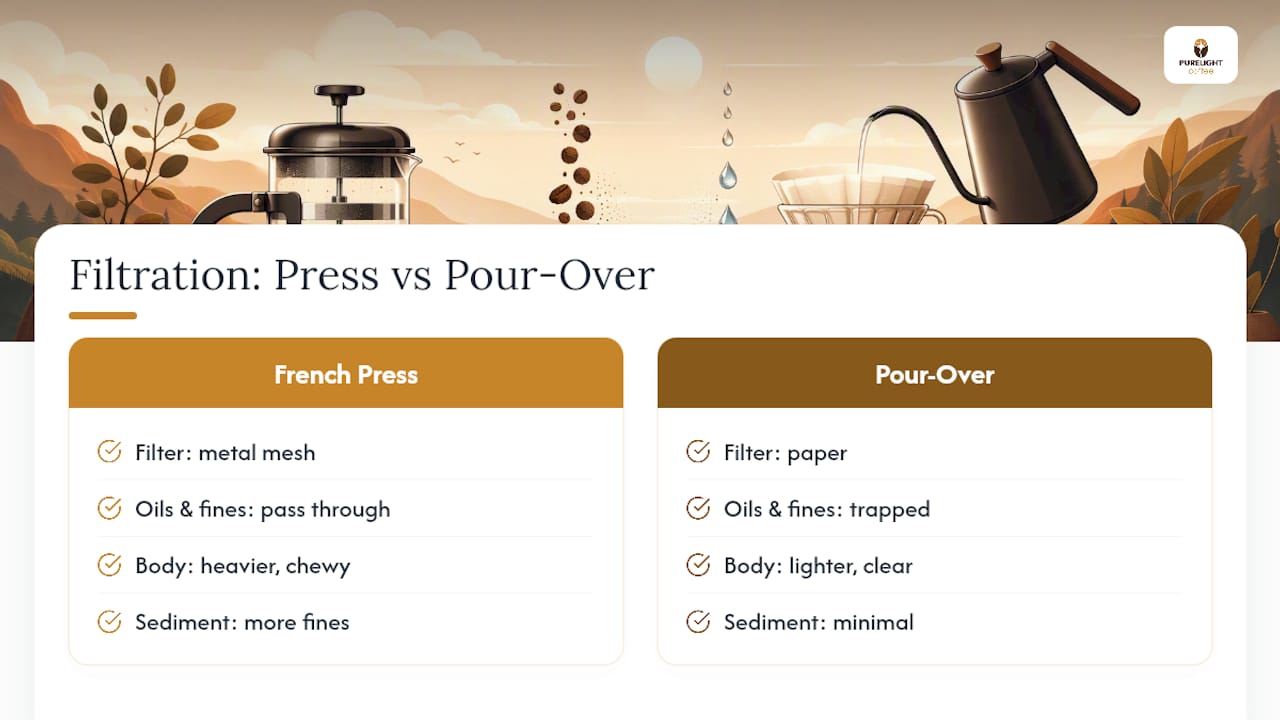
This is why a French press cup and a pour-over cup made from the exact same beans can taste like two different coffees. Medium and dark roasts tend to shine in a French press because the added weight balances out toasted, nutty, or chocolate notes. Light roasts, especially washed or natural-process single origins, tend to do better in pour-over, where clarity lets berry, citrus, or floral notes register instead of getting muddied. Ethiopia Prime (Single Origin), a natural-process light roast, is a good example of a bean that usually tastes brighter and more distinct in a pour-over dripper than in a press.
Pro Tip: If a French press cup tastes flat or muddy, you’re probably tasting fines that never settled. Let it rest two extra minutes before pouring so more sediment drops to the bottom.
How Do You Actually Brew Each One?
Both recipes below are starting points. Adjust ratio slightly once you know how you like your cup.
French press, step by step:
- Use a 1:15 ratio, coarse grind, roughly 30 grams of coffee to 450 grams of water for a standard press.
- Pour half the water, wait 30 to 45 seconds, then stir gently to wet every ground evenly.
- Add the rest of the water, place the lid on with the plunger up, and steep for 4 minutes total.
- Press down slowly and pour immediately to avoid over-extraction from grounds sitting in contact with water.
Pour-over, step by step:
- Use a 1:16 ratio, medium-fine grind, about 25 grams of coffee to 400 grams of water.
- Bloom with double the coffee weight in water, about 50 grams, and let it sit 30 seconds.
- Pour in slow, controlled circles using a gooseneck kettle, keeping the drawdown between 2 and 4 minutes.
- Watch the bed of grounds. If water pools unevenly or drains too fast in spots, that’s channeling, and it means your pour is too aggressive.
Common fixes: Sour or thin usually means under-extraction, so grind finer or extend contact time. Bitter or harsh usually means over-extraction, so grind coarser or pull back on time. Muddy French press cups often trace back to inconsistent grind size, which is why a burr grinder matters more than almost any other single upgrade. For more starting ratios across roast levels, our brew ratio guide has recipes worth bookmarking.
Pro Tip: Weigh your water instead of eyeballing it. A kitchen scale removes more guesswork from either method than a fancier kettle ever will.
What Will Equipment and Setup Actually Cost You?
A basic French press runs about $20 to $40, and that’s often the entire setup if you already own a kettle. Pour-over costs more up front once you add a gooseneck kettle for controlled pouring, typically landing between $55 and $95 for dripper, filters, and kettle combined.
- A burr grinder and a basic scale are worth buying regardless of which method you pick. Grind consistency affects both cups more than the brewer itself.
- French press has zero ongoing filter cost since the mesh is reusable and just needs regular rinsing.
- Pour-over needs paper filters continuously, a small but real recurring cost.
- A French press or pour-over needs loose ground coffee. Choose whole beans if you want to set the grind yourself. K-Cup-compatible pods need a compatible pod machine.
Does the Brewing Method Affect Your Health?
It can, in one specific way. Coffee contains a compound called cafestol, and metal mesh filters let it pass through into your cup, while paper filters trap most of it. Cafestol has been linked to raised LDL cholesterol in some research, which means French press coffee generally carries more of it than pour-over.
For most people who drink coffee in moderation, this isn’t a reason to panic. If you’re managing cholesterol or have been told to watch it, leaning toward paper-filtered methods like pour-over is a reasonable, low-effort adjustment. Talk to a doctor about what actually applies to your own numbers.
How Do You Choose Between Them?
Run through this short checklist before you buy anything:
- What do you actually crave in a cup? Heavy and rich points to French press. Bright and layered points to pour-over.
- What roasts are already in your cabinet? Mostly medium and dark leans French press. Mostly light and single-origin leans pour-over.
- How many cups do you make at once? French press scales easily for two or more people. Pour-over is built more for one cup at a time unless you’re using a batch brewer.
- How much morning ritual do you want? French press is closer to dump-and-wait. Pour-over demands your attention for the full pour.
- What’s your budget today versus later? French press is cheaper to start. Pour-over asks for a bit more now, mainly the kettle.
The most common mistake isn’t picking the wrong brewer. It’s using the wrong grind for it, or skipping a decent grinder altogether and wondering why the cup tastes inconsistent every single morning.
Which Purelight Coffee Bags Fit Each Brewing Style?
Our roasting partner in Bend, Oregon supplies the origin, roast and processing details on our coffee pages. For blends, listed cupping scores describe component coffees. See Sourcing & Testing for the scope of scores and lab reports, and our Shipping Policy for production and transit estimates.
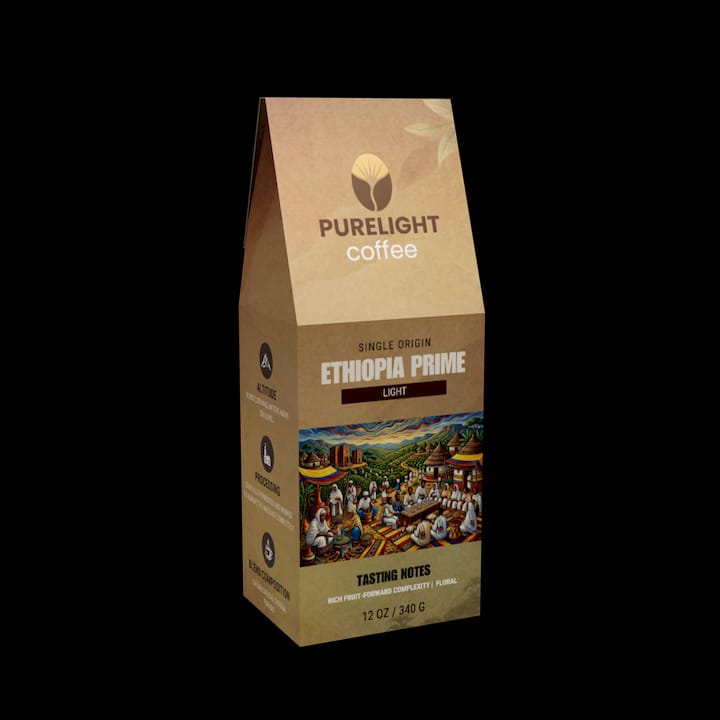
For pour-over, try Ethiopia Prime for berry and citrus notes. For French press, Smith River offers a nutty medium roast, while Cascades brings fuller medium-dark cocoa notes. Choose whole bean and grind for the brewer you are using. Our K-Cup pods are not a format for either method.
A Coffee Drinker’s Honest Take on Owning Both
Owning one brewer forces a compromise you don’t need to make. Weekday mornings call for French press because it’s fast, forgiving, and hard to mess up badly. Weekend tastings call for pour-over because the extra attention actually pays off in the cup, especially with a single origin worth slowing down for. Pair a dark roast pod with French press convenience, and save the gooseneck kettle for the bean you actually want to taste.
— Shawn Lee
Try Both Without Overthinking the Gear
You can compare both methods with one bag. Keep the coffee the same, then use the grind and recipe appropriate to each brewer. Our 12 oz whole-bean bags let you make that adjustment at home.
Start with Smith River for nutty, chocolate notes or Ethiopia Prime for brighter fruit. Brew, taste and note which method you prefer.
Comparing two house blends
Choose any two 12 oz bags from our house blends for $42.95 as a one-time purchase. Mix Smith River, High Lakes and Cascades in whole bean or ground.
One pair offer per order, on one-time purchases only. Subscription items are excluded. Offers cannot combine with discount codes or other automatic discounts; the best eligible offer applies. Prices are in USD, plus applicable tax. Free U.S. shipping.
Sources
- French press brewing — About Coffee
- Pour-over vs French press — Home Brew Expert
- French press vs pour over — Coffee Craftery
- Burr vs blade grinder — Moccamaster (US)
Recommended
- Coffee Brew Ratio: Practical Ratios and Recipes to Try
- Small-Batch Coffee: What Home Brewers Need to Know
- Small-Batch Roasting: A Guide for Home Roasters
- A Moka Pot Makes Espresso-Style Coffee Without the Machine
This article was produced by the Purelight Coffee team. It’s general coffee and brewing information, not professional or medical advice - results will vary with your equipment, water, and beans.


