

Single estate coffee means every bean in the bag came from one named farm or estate, not a blend of lots from a region, as explained in this пълен наръчник на приготвянето на кафе у дома. It’s a subset of single-origin coffee, not a synonym for it. Every single estate coffee qualifies as single-origin, but plenty of single-origin coffee comes from dozens of farms pooled together. The estate label promises tighter provenance and usually a smaller, rarer harvest.
TL;DR:
- Estate coffee comes from one named farm, offering tighter provenance but is not regulated, so label accuracy depends on the producer’s transparency.
- It typically costs more due to smaller harvests, selective hand-picking, unique processing methods, and its ability to produce more distinct and consistent flavors.
- Provenance details like varietal, altitude, harvest date, and processing method are essential for verifying estate claims; vague listings often lack transparency.
- Buyers should confirm the farm name, harvest season, varietal, altitude, and processing method before purchasing premium estate coffee to ensure authenticity.
- Estate coffees are ideal for tasting specific places or as thoughtful gifts, but regular consumers may prefer more forgiving blends for everyday consistency.
Table of Contents
- Single Estate vs. Single-Origin: What’s the Real Difference?
- Why Single Estate Coffee Costs More and Tastes Different
- What Provenance Details Should Appear on the Bag?
- How Do You Evaluate and Buy Single Estate Coffee?
- Where Purelight Coffee Shows This Kind of Sourcing Detail
- When Is Single Estate Coffee Actually Worth It?
- Try an Estate-Style Single Origin from Purelight Coffee
- Sources
- FAQ
Single Estate vs. Single-Origin: What’s the Real Difference?
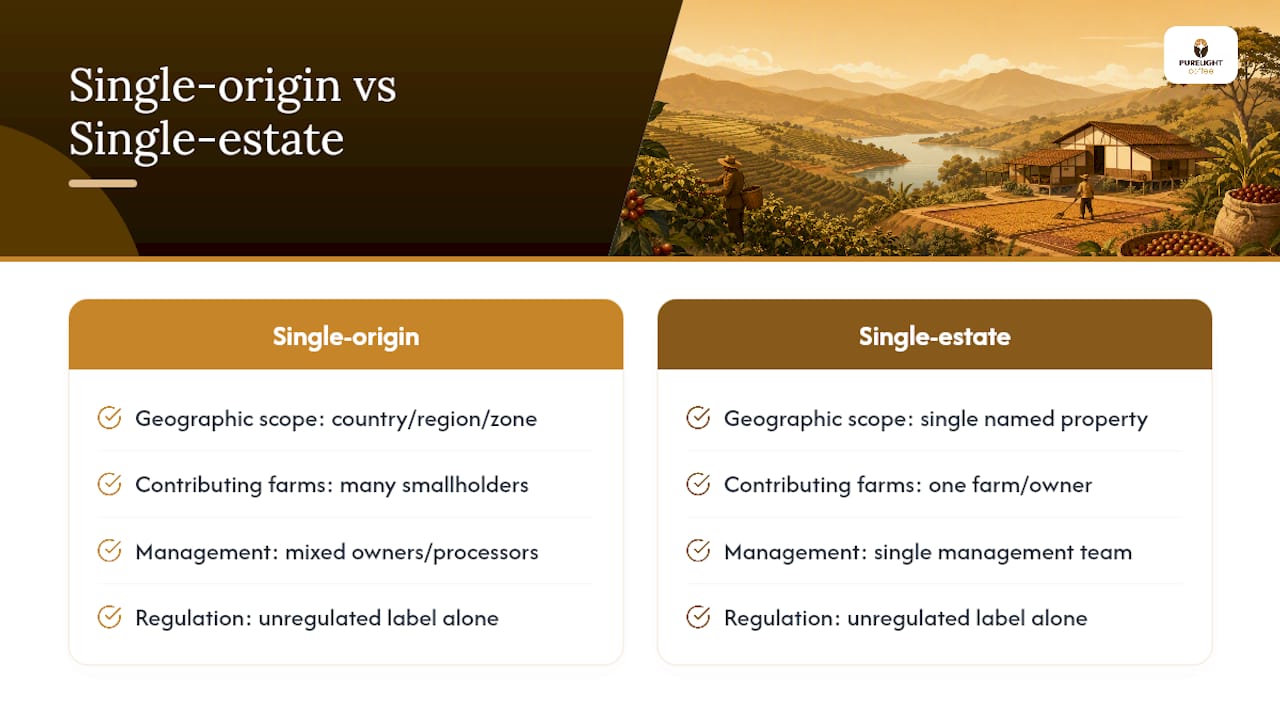
“Single-origin” is a wide net. It can mean a coffee traced to one country, one region, or one small growing zone, and that coffee is often assembled from many small farms delivered to a shared mill or cooperative. Single-origin coffee is generally defined as coffee grown within one known geographic origin, which leaves room for a bag labeled “Ethiopia” to represent hundreds of smallholder plots.
“Single estate” narrows that down to one property, one owner, one harvest plan. Think of a named farm like a vineyard rather than an appellation. A bag that says “Estate X, Yirgacheffe” is telling you something a bag that just says “Yirgacheffe” is not: a single management team picked, processed, and sold that specific lot.
Here’s the catch worth knowing before you pay a premium for it. Neither term is regulated the way “organic” or “extra virgin” is. Roasters and importers apply “estate” and “single-origin” with varying rigor, so the label alone is not proof. What backs it up matters more than the word itself, which is why the datapoints in the sections below carry more weight than the marketing copy.
Why Single Estate Coffee Costs More and Tastes Different
Estate coffee tends to taste more consistent and more distinct because one grower controls every variable, from picking to fermentation. Selective, hand-picked cherries from a single site concentrate flavor characteristics tied to that soil, elevation, and microclimate instead of averaging them out across dozens of farms.
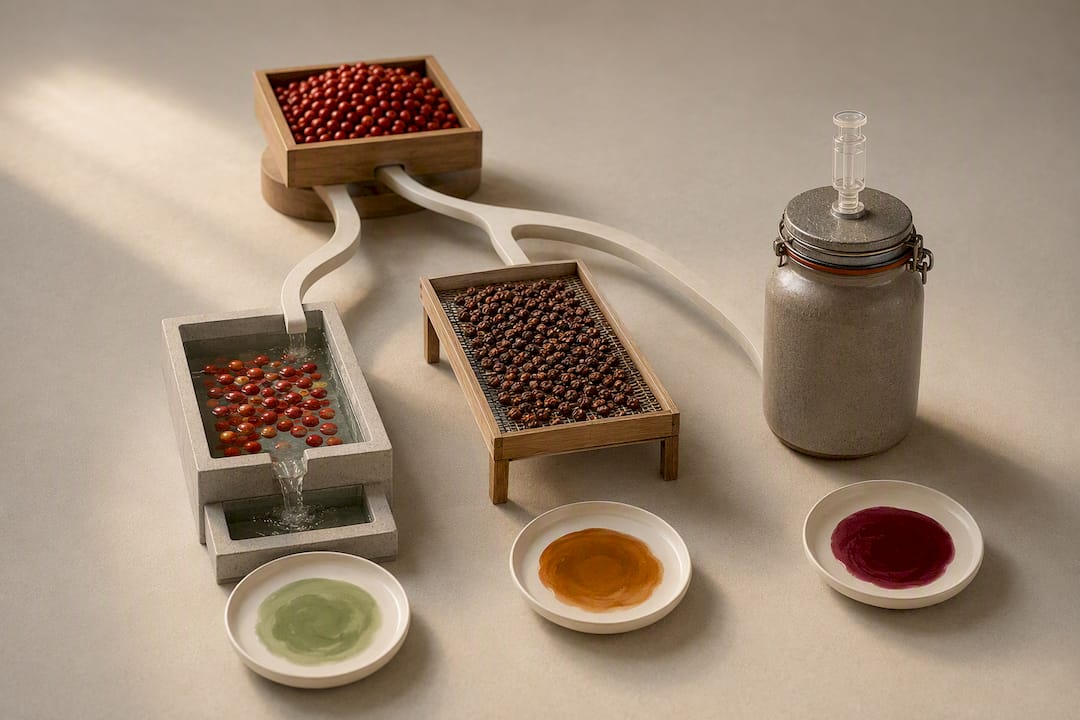
Processing choices amplify that effect. A washed process, a natural (dry) process, or an anaerobic fermentation all pull different flavors out of the same cherry, and estates that can afford to experiment with these methods on small lots often produce their most interesting, and most expensive, coffees.
Supply is the other half of the price story. Smaller lot sizes and selective harvesting raise costs and limit the quantity of coffee reaching the market in a given season, and because a single estate coffee depends on one harvest at one farm, a bad weather year or a small planting means the coffee simply runs out. There’s no larger regional pool to draw from to smooth over a short crop.
What Provenance Details Should Appear on the Bag?
A product page or bag that backs up an estate claim usually shows more than a farm name in bold type. Look for the specifics that let you connect the coffee to a place and a process, not just a story.
- Estate or farm name, and cooperative name if the coffee moves through one for milling or export.
- Varietal, such as Heirloom, Bourbon, Typica, or Caturra, since genetics shape cup character as much as terroir does.
- Altitude, usually given in meters or feet, because higher elevation generally slows cherry maturation and builds more complex acidity.
- Harvest and processing dates, which tell you how recent the crop is, not just how recently it was roasted.
- Processing method (washed, natural, honey, anaerobic), which shapes body and fermentation-driven flavor notes more than almost any other single variable.
Genetic testing is starting to enter this conversation from the research side. Genomic methods can now confirm varietal identity in cases where a name and a plant’s actual lineage have drifted apart, and some cooperatives and specialty buyers are starting to use that science to protect their own claims. A documented case involving the SL-09 variety showed how a name and its genetic identity can diverge enough to require lab work to sort out. That kind of testing is not yet standard on a retail bag, though. For now, transparency from the producer and the roaster remains the first and most practical line of verification.
Pro Tip: If a product page lists altitude and processing method but skips the harvest date entirely, that’s usually a sign the “estate” claim is more marketing than documentation.
How Do You Evaluate and Buy Single Estate Coffee?
Run through this before you check out, especially if you’re paying a premium over a house blend.
- Confirm the estate name and the season. A real single estate listing names the farm and tells you which harvest you’re buying, not just “current crop.”
- Match varietal, altitude, and processing to the roast level. A light roast on a naturally processed, high-altitude lot will taste very different from a medium roast on a washed lot at lower elevation, so read before you buy if you already know what you like.
- Pick your format with freshness in mind. Whole bean holds aroma and flavor longer than pre-ground, and if you drink estate coffee regularly, a subscription can keep a fresher rotation coming without you having to reorder manually.
- Watch for vague listings. No harvest window, no altitude, no processing method, just a country name and a nice photo, is a red flag worth pausing on. Guides on verifying ethically sourced coffee walk through similar checks in more depth.
Where Purelight Coffee Shows This Kind of Sourcing Detail
Our product pages are a reasonable place to see what this provenance information looks like in practice. The Ethiopia Prime single-origin listing and the Brazil Classic single-origin page both carry tasting notes, roast level, and sourcing details, and you can compare them directly against the checklist above.
Coffee is roasted in small batches by a roasting partner in Bend, Oregon, and is available as whole bean or ground, with a subscription option for those who want a steady rotation. We don’t claim farm-level or lot-level traceability beyond what’s stated on a given product page. If a listing doesn’t name a specific detail, treat that as a limit of what’s published, not as a hidden guarantee.
When Is Single Estate Coffee Actually Worth It?
Reach for estate coffee when you want to taste a specific place, or when you’re buying a gift that should feel considered. For daily drinking, a well-made blend or house roast usually delivers more consistent value cup to cup. One thing estate coffees do demand: they’re more sensitive to grind size and brew ratio than a forgiving blend, so it’s worth experimenting a little before you write one off.
— Shawn Lee
Try an Estate-Style Single Origin from Purelight Coffee
Purelight Coffee’s edge isn’t a bigger catalog. It’s that every single-origin listing carries the exact provenance details this article just walked through, so you can check the claim yourself instead of taking a bag’s word for it. Browse the single-origin collection and compare the Ethiopia Prime and Brazil Classic listings side by side, or if you want a dependable daily cup instead, the Cascades house blend is built for that. Every order ships free across the U.S. with no minimum, and a subscription knocks 15% off eligible products if you want a steady supply without reordering each time. Before you check out, run the listing against the provenance points covered above, then pick the bag that matches what you actually want to taste.
Sources
- Single-origin coffee — Wikipedia
- PMC article on coffee genetics and related research
- SL-09 complete dossier — Vela Ethan
FAQ
What Does “Estate Coffee” Mean?
Estate coffee means every bean in the bag was grown on one named farm or property, rather than pooled from multiple growers in a region. It’s a narrower claim than “single-origin,” which can cover an entire country or district.
What Is the Most Popular Single-Origin Coffee?
Ethiopian and Colombian single-origin coffees are among the most widely sold worldwide, largely because both countries have long-established growing regions with distinct, recognizable flavor profiles. Popularity varies by market and roaster, so treat any single answer as a general trend rather than a fixed ranking.
Why Is Single-Origin Coffee More Expensive?
Single-origin and estate coffees often cost more because smaller, selectively harvested lots limit supply and raise the cost of sorting and processing compared to large blended batches. Specialty processing methods like natural or anaerobic fermentation add labor and risk, which also pushes up price.
What Is the Number One Coffee in the World?
There’s no single, universally agreed “best” coffee. Rankings depend on cupping competitions, personal taste, and roast style, so the more useful question is which growing region and processing method match what you personally enjoy drinking.
Recommended
- 5 Checks to Verify Ethically Sourced Coffee: Traceability, Price, Roas
- Farm to Cup Coffee: What Traceability Really Means
- Single Origin Espresso for Home Baristas: How to Dial In
- Ethopia Prime(Single Origin) - 12 OZ
This article was produced by the Purelight Coffee team. It’s general coffee and brewing information, not professional or medical advice - results will vary with your equipment, water, and beans.


