

Shade grown coffee is coffee cultivated under a canopy of trees rather than in cleared, full-sun rows. It generally supports more bird species, protects soil, and stores more carbon than sun-grown coffee, and slower cherry ripening under shade often produces denser, more complex-tasting beans. The catch: shade adds management complexity, and poorly run shade systems can actually raise disease and pest pressure. What separates a real shade farm from a marketing label comes down to verification, which the rest of this guide gets into.
TL;DR:
- Certified Bird Friendly shade coffee guarantees a multi-strata, native canopy with organic management, making it the most reliable certification for ecological benefits.
- Shade cover of 30 to 60 percent strikes a balance between productivity and ecological value, with above 70 percent often reducing yields without management adjustments.
- Well-managed shade farms support biodiversity, soil stability, and carbon storage, especially when located within landscapes that include intact forest nearby.
- Proper shade management involves species choice, pruning, leaf litter control, and integration with pest management to avoid increased diseases like leaf rust.
- The term “shade-grown” on packaging is unregulated, so verifying certifications or direct farm details is essential to ensure genuine ecological and quality benefits.
Table of Contents
- What Is Shade Grown Coffee, Exactly?
- What Ecological Benefits Come From Shade Systems?
- How Does Shade Affect Cup Quality and Farm Economics?
- What Trade-Offs and Risks Come With Shade Management?
- Which Certifications Actually Verify Shade-Grown Claims?
- How Should You Shop for Shade-Grown Coffee?
- Why Genuine Shade-Grown Coffee Is Worth the Premium
- Where to Try Shade Grown Coffee From Purelight Coffee
- Sources
- FAQ
What Is Shade Grown Coffee, Exactly?
Shade isn’t a single thing. It’s a spectrum, and where a farm sits on that spectrum determines almost everything else about the coffee, from what lives in the canopy to how the beans taste in your cup.
At one end sits rustic shade, sometimes called forest coffee. Farmers plant coffee shrubs directly under existing native forest, clearing only the understory. Canopy cover in this system is typically high, with multiple tree layers and many native species overhead. This is the closest thing to coffee growing wild, and it’s increasingly rare because it’s labor-intensive and yields are modest.
Traditional polyculture comes next: farmers deliberately plant a mix of shade trees, often fruit trees, timber species, and nitrogen-fixing legumes like Inga, alongside the coffee. Canopy cover typically ranges from moderate to relatively high, with two or three distinct height layers. This is what most people picture when they hear “shade-grown.”
Commercial polyculture thins that mix down to fewer species, usually one or two, chosen for fast growth and management ease rather than ecological value. Canopy percentages can still look respectable on paper, 30 to 50% is common, but the biodiversity payoff drops because a monoculture shade layer doesn’t feed and house nearly as many species as a mixed one.
Shaded monoculture trims it further still, sometimes to a single shade species planted in rows for uniformity, with canopy cover often below 30%.
At the far end sits full-sun coffee, grown with no overhead canopy at all. Full-sun systems became widespread starting in the 1970s because they let farmers plant coffee more densely and push yields higher in the short term, an approach agronomists still call the “Green Revolution” push in coffee farming.
A workable rule of thumb, based on farm-level analysis of shade systems, is that canopy cover in the 30 to 60% range tends to balance ecological function with productivity. Push much past 60 to 70% and yields can drop without other adjustments to the system.
Why does canopy percentage matter beyond ecology? Shade changes the coffee plant’s own biology:
- Overhead trees drop daytime temperatures and buffer nighttime cold, smoothing out the swings that stress coffee cherries.
- Slower, cooler ripening extends the maturation window for each cherry, sometimes by weeks compared to full sun.
- That extra time lets the plant accumulate sugars and other compounds more gradually, which specialists link to denser, more evenly developed beans.
- Leaf litter from shade trees builds organic matter in the soil faster than bare rows, feeding the coffee plant’s root system over time.
None of this is exotic biology. It’s closer to what happens when you slow-roast a vegetable instead of blasting it under high heat: extra time changes the internal chemistry, not just the surface.
What Ecological Benefits Come From Shade Systems?
The clearest, best-documented benefit of shade coffee is habitat. The Smithsonian Migratory Bird Center has spent decades studying this exact question, and its research consistently finds that Bird Friendly certified shade coffee farms support far more bird species and overall biodiversity than sun coffee plantations, along with real soil protection, pollination support, and carbon storage.
That last point, carbon, deserves its own mention. Because shade coffee farms carry standing trees, some studies report shade systems accumulating carbon in biomass and soil at levels approaching those of intact forest, a meaningful climate function for land that’s still generating income for a farming family rather than sitting untouched.
Beyond birds and carbon, shade canopies do quiet work on the ground. Root systems and leaf litter from shade trees hold soil in place on hillside farms, where erosion is a constant threat during heavy rain. Tree cover also slows water runoff and improves the soil’s ability to retain moisture between rains, which matters more every year as rainfall patterns get less predictable in many coffee-growing regions.
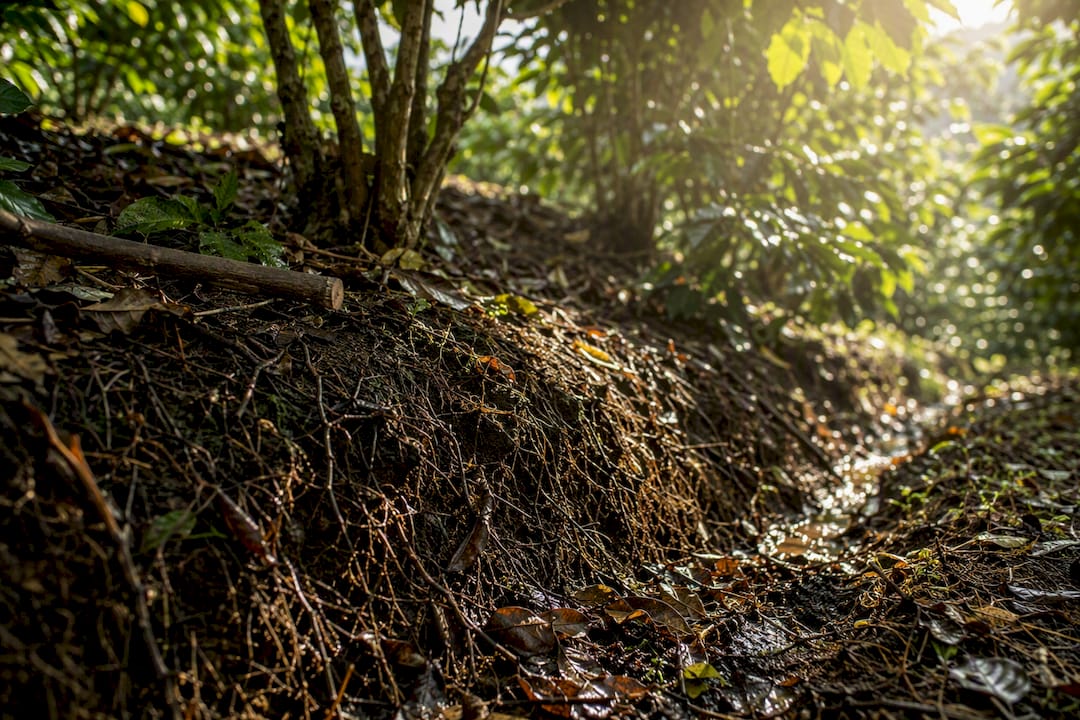
A broader multi-study review confirms the pattern holds across the literature: increased canopy cover correlates with better biodiversity outcomes, reduced erosion, and improved water retention compared to full-sun systems, and it does so consistently enough that these aren’t one-off findings from a single farm or region.
Here’s the part that gets skipped in most coffee marketing, though: not all shade counts equally.
- A single row of fast-growing shade trees planted for cosmetic reasons doesn’t deliver the same biodiversity boost as a genuine multi-strata canopy.
- Species diversity in the shade layer matters as much as the percentage of cover; ten native tree species beat one non-native species at 50% canopy.
- Conservation value climbs sharply when a shaded farm sits inside a landscape mosaic that includes nearby intact forest, rather than standing as an isolated green patch surrounded by cleared land.
- Even a well-shaded farm can’t fully replace primary forest for species that need large, unbroken habitat ranges.
That landscape point is worth sitting with. A shade farm bordering a forest reserve does more conservation work than an identical farm surrounded by pasture, even if both list the same canopy percentage on paper. Context changes the math.
How Does Shade Affect Cup Quality and Farm Economics?
Slower ripening isn’t just an ecological footnote. It’s the mechanism that connects shade to what actually ends up in your mug.
When cherries mature gradually under a cooler canopy, the coffee plant has more time to move sugars and other compounds into the developing bean. Research on shade-grown flavor chemistry links this slower pace to greater accumulation of sugars and secondary metabolites, including compounds tied to acidity and aroma, which specialists connect to denser beans and often more layered cup profiles. A bean that took its time tends to taste like it.
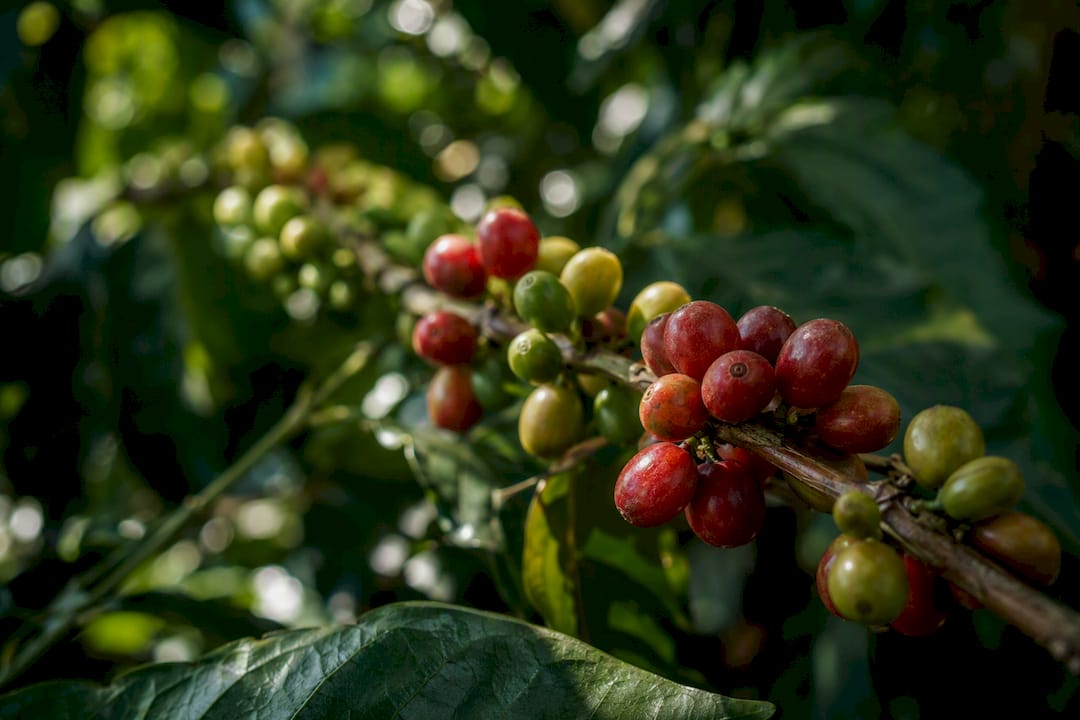
Contrast that with full-sun cherries, which ripen faster under constant heat and light. Faster isn’t necessarily worse across the board, some full-sun lots produce clean, bright coffee, but the rushed maturation generally gives the plant less time to build the sugar and acid complexity that shade allows.
This slower biology plays out in farm economics in a specific, somewhat counterintuitive way, highlighting the complex benefits and challenges of local sourcing in coffee production. Coffee yield doesn’t move in a straight line with shade cover. Instead, most agronomic data describes something closer to a curve:
- At low or no shade, yields per tree can peak in the short term, but the trees burn out faster and need more chemical inputs to sustain that output.
- At moderate shade, roughly the 30 to 60% range mentioned earlier, yields dip somewhat compared to peak full-sun output, but individual trees stay productive for more years.
- At heavy, dense shade above that range, yields can drop further unless the farmer actively manages tree spacing and pruning to let in enough light.
The practical upshot: a moderately shaded farm often produces less coffee per acre in any single harvest, but keeps producing at a decent level for a longer stretch, which changes the long-run economics for a smallholder more than a single bad or good season would.
This is also the root reason shade-grown lots frequently sell at a premium. It isn’t purely a marketing story. Buyers paying more for shade-grown beans are, in effect, paying for a plant that grew more slowly, developed more sugar and acid complexity, and came from a farm that likely earns less per acre in raw yield than a full-sun operation next door. The premium isn’t charity. It’s closer to compensation for a different, slower production model.
What Trade-Offs and Risks Come With Shade Management?
Shade isn’t automatically good farming. It’s a tool, and like any tool, using it badly causes real problems.
The clearest example is disease pressure. Coffee leaf rust, a fungal disease that can devastate a harvest, thrives in the humid, still air that dense, poorly managed shade can create. Research on shade management cautions that improperly managed canopy can worsen biotic stress, including rust outbreaks, and stresses that shade-tree management has to be adapted to local climate and farm conditions rather than applied as a one-size-fits-all recipe. A canopy that’s perfect for a farm in one valley can trap moisture and invite disease on a farm just a ridge over with different airflow.
Coffee berry borer, an insect that burrows into cherries and ruins the bean inside, shows a more mixed relationship with shade. Some shaded systems support more of the borer’s natural predators, birds and parasitic wasps among them, which can suppress outbreaks. Other times, shade’s cooler, more humid microclimate gives the borer better breeding conditions. The honest answer is that outcomes depend heavily on the specific farm, elevation, and tree species mix, not on some fixed rule about shade helping or hurting.
Given that, farmers who get real value out of shade tend to follow a similar practical approach:
- Choose shade-tree species deliberately, favoring native, nitrogen-fixing varieties over whatever grows fastest.
- Prune the canopy on a regular cycle to control light levels rather than letting shade trees grow unchecked.
- Manage leaf litter and pruning debris actively, since built-up plant material can harbor fungal spores if left too thick.
- Combine shade management with integrated pest management (IPM) rather than treating shade as a standalone fix for pests and disease.
- Target canopy cover in that 30 to 60% working range, adjusting up or down based on local humidity and airflow.
Pro Tip: If you’re buying single-origin coffee and care about how the farm actually manages its shade, ask the roaster directly whether they know the farm’s pruning practices or shade-tree species mix. A roaster who can answer specifically is usually closer to the source than one who just repeats “shade-grown” as a selling point.
None of this makes shade a bad bet. It makes it a farming decision with real trade-offs, the same as choosing organic inputs over synthetic fertilizer, or dry processing overwashed. Good shade farming takes more knowledge and more labor than full-sun rows. That’s exactly why it deserves a premium when it’s done right, and why “shade-grown” printed on a bag without any backup deserves some skepticism.
Which Certifications Actually Verify Shade-Grown Claims?
Here’s the uncomfortable truth: “shade-grown” by itself is not a regulated term. Any roaster can print it on a bag with zero third-party check on whether the coffee came from rustic forest farming or a token row of trees at 15% canopy. Independent analysis of shade-grown marketing confirms that only certain third-party certifications provide audited thresholds that actually guarantee a multi-strata, largely native canopy paired with organic management.
The Bird Friendly certification, run by the Smithsonian Migratory Bird Center, sits at the strict end of that scale. It requires farms to already hold organic certification before Bird Friendly status is even considered, then layers on specific canopy cover minimums, a required number of shade-tree species (usually at least ten), and defined canopy height standards. That stacking, organic first, then structural shade requirements on top, is why Bird Friendly certification tends to show the strongest biodiversity outcomes of any coffee labeling scheme in wide use.
Rainforest Alliance certification covers a broader set of sustainability criteria, water use, worker conditions, agrochemical limits, and while it includes some shade and biodiversity components, its shade requirements are generally less specific and less strict than Bird Friendly’s structural thresholds.
USDA Organic certification, meanwhile, says nothing directly about shade at all. It restricts synthetic pesticides and fertilizers, which matters, but a coffee can be fully organic and still grow in full sun.
When you’re standing in front of a bag of coffee, or scrolling a product page, here’s a short checklist worth running through:
- Look for the Bird Friendly seal specifically if canopy and habitat quality are your priority, not just a general sustainability claim.
- Check whether organic certification is present, since it’s a prerequisite for Bird Friendly status and a baseline worth caring about on its own.
- Look for actual farm or origin transparency, not just a country name, but some indication of the specific region or cooperative.
- See if the roaster mentions canopy percentage or shade-tree species anywhere in their sourcing notes.
- If none of that’s listed, contact the roaster and ask directly. A vague answer tells you as much as a good one.
How Should You Shop for Shade-Grown Coffee?
Turning that checklist into an actual purchase means prioritizing. Certified Bird Friendly coffee sits at the top of the list if audited canopy and organic standards matter most to you. Right behind it: well-documented single-origin lots where the roaster discloses real sourcing detail rather than a generic “sustainably grown” tagline. Transparent roaster disclosure, even without a formal certification, still beats a bag that says nothing at all.
Format matters here too, and it’s worth being honest about what each one can and can’t tell you. Whole bean and ground bags on a single-origin collection page tend to carry the most sourcing detail, since a single-origin coffee lives or dies on that story. Pods and instant formats generally involve more blending and processing steps between farm and cup, which makes it harder for a shopper to trace shade practices back to a specific growing region, even when the underlying beans are good.
Purelight Coffee is an independent online specialty coffee brand serving customers across the United States, with coffee roasted in small batches by a roasting partner based in Bend, Oregon. The lineup spans single-origin coffees, house blends, decaf, coffee pods, instant coffee, and Japanese matcha, and every product page lists tasting notes, roast level, and sourcing details so you can match a coffee to your taste and your morning routine, rather than guessing from a label alone.
A few practical notes if you’re comparing options:
- Every U.S. order ships free with no minimum purchase, so trying a new origin doesn’t require stocking up.
- A subscription option takes 15% off eligible products and renews automatically until you cancel it.
- Product pages state roast level and tasting notes directly, which helps when you’re trying to figure out whether a coffee will suit drip, pour-over, or espresso.
Why Genuine Shade-Grown Coffee Is Worth the Premium
The conventional pitch on shade-grown coffee treats it like a simple upgrade, better for birds, better for the planet, and somehow also just better coffee, full stop. The evidence doesn’t support quite that clean a story, and I think that’s actually the more interesting version of it.
Shade-grown coffee done well delivers real, measurable ecological value and often a denser, more complex cup. Shade-grown coffee done badly, dense canopy with no pruning discipline, one non-native tree species, no organic practices underneath, can lose money for the farmer and invite disease without delivering much biodiversity benefit at all. The label alone tells you almost nothing. The management behind it tells you everything.
My honest recommendation: prioritize certified or well-documented shade-grown lots, and treat the price premium as compensation for slower biology and harder farming, not as a marketing markup. Try a single-origin lot with real sourcing detail, pay attention to what you’re actually tasting, and see if the extra complexity holds up for your palate. That’s a better test than any seal on a bag.
— Shawn Lee
Where to Try Shade Grown Coffee From Purelight Coffee
Purelight Coffee gives you a straightforward way to put this guide into practice without hunting across a dozen roasters’ websites for sourcing detail. The lineup includes Cascades, a medium-dark house blend sold in 12 oz bags, built for drinkers who want a consistent, bolder everyday cup. For a lighter roast in pod form, High Lakes Light Roast comes in a 12-pod box that works with standard K-Cup-compatible brewers, useful if your mornings run on convenience more than a pour-over ritual. That same profile is also available as High Lakes Light House Blend in a 12 oz bag, whole bean or ground, for anyone who wants the lighter roast without the pod format.
Every U.S. order ships free with no minimum purchase, whether you’re buying once or setting up a recurring order through Subscribe & Save for 15% off eligible products. Beyond these three, the single-origin collection and house blend lineup both list roast level and tasting notes on every product page, and the decaf collection covers an Indonesian decaf for anyone cutting caffeine without cutting flavor. Coffee is roasted in small batches by a roasting partner in Bend, Oregon. Browse the single-origin and house blend collections to find a cup that fits how you actually brew.
Sources
Claims in this article draw on primary research and standards bodies rather than marketing copy. For readers who want to check the underlying evidence:
- Ecological Benefits of Shade-grown Coffee | Smithsonian’s National Zoo and Conservation Biology Institute
- Shade-grown coffee - Wikipedia
- Frontiers in Sustainable Food Systems (2022) — on shade management and disease/pest trade-offs
- How shade coffee lends conservation a hand | Knowable Magazine
FAQ
What Coffee Counts as Shade-Grown?
Shade-grown coffee is any coffee grown under a tree canopy rather than in cleared, full-sun rows, ranging from rustic forest farming to lightly shaded commercial plots. The term itself isn’t regulated, so only certifications like Bird Friendly provide an audited guarantee of genuine multi-strata canopy and organic management.
Is Shade-Grown Coffee Actually Better Than Sun-Grown?
For biodiversity, soil health, and carbon storage, shade-grown coffee generally outperforms sun-grown coffee, according to Smithsonian research on shade coffee ecology. For flavor, slower ripening under shade often builds denser, more complex beans, though quality still depends heavily on processing and roasting, not shade alone.
What Does “Shade-Grown” Mean on a Coffee Bag?
It means the coffee plants grew under some level of tree cover instead of full sun, but the term carries no fixed canopy percentage or verification requirement on its own. Without a certification like Bird Friendly or specific sourcing detail from the roaster, “shade-grown” on a label is a claim, not proof.
Does Purelight Coffee Sell Shade-Grown Coffee?
Purelight Coffee’s product pages list tasting notes, roast level, and sourcing details for each coffee, including the single-origin collection, so you can review that information directly before buying. Current sourcing details and pricing for each product are listed on the site rather than repeated here.
How Do I Know if a “Shade-Grown” Claim Is Real?
Check for a third-party certification like Bird Friendly, which requires organic certification as a prerequisite plus specific canopy and tree-species minimums. If a bag just says “shade-grown” with no certification or farm detail, the most reliable move is to contact the roaster directly and ask what they actually know about the farm’s shade management.
Recommended
- What Honey Processed Coffee Is and Why It Tastes That Way
- Farm to Cup Coffee: What Traceability Really Means
- Freshly Roasted Coffee: When to Drink It, How to Buy It
This article was produced by the Purelight Coffee team. It’s general coffee and brewing information, not professional or medical advice - results will vary with your equipment, water, and beans.


