

Cold brew steeps coffee in cold water, while iced coffee starts with a hot brew that is cooled or poured over ice. Choose cold brew when you want to prepare a batch ahead, or brew hot over measured ice when you want a cup sooner. Compare the flavor and serving strength rather than assuming one method is always less acidic.
TL;DR:
- Cold brew extracts fewer acidic and aromatic compounds due to slow cold water infusion over 8 to 24 hours, resulting in a rounder, less bitter flavor.
- Iced coffee brewed hot pulls out more volatile aromatics and acids quickly, producing a brighter, more acidic taste with a more pronounced nose.
- Cold brew uses a coarse grind and ratio of approximately 1:4 to 1:8, with concentrate stored up to two weeks in refrigeration, while hot-brewed iced coffee uses a medium grind and brews rapidly.
- Cold brew’s full-strength caffeine content can surpass hot coffee when undiluted, but dilution levels determine final caffeine per serving.
- Bean roast level impacts flavor stability, with light roasts maintaining acidity best in flash brewing and cold brew elevating smoothness regardless of roast.
Table of Contents
- Cold Brew vs Iced Coffee: Why the Cup Tastes Different
- The Real Differences Between Cold Brew and Iced Coffee, Spec by Spec
- How to Make Cold Brew Concentrate and Fast Iced Coffee
- Choosing Beans and Roast Levels for Each Method
- The Quick Decision Rule
- What the Research Actually Tells Home Brewers
- Try High Lakes for Either Brewing Method
- Sources
Cold Brew vs Iced Coffee: Why the Cup Tastes Different
The gap between these two drinks comes down to one variable: temperature. Hot water extracts compounds fast. Cold water extracts them slowly and selectively, and that difference in speed changes which molecules end up in your cup.
Coffee extraction follows a curve. Early in a hot brew, water pulls out acids and bright aromatics almost immediately, then moves on to sugars and finally the heavier, bitter compounds if you over-extract. Cold water never moves fast enough to pull out the same volume of those acidic and volatile aromatic compounds in a reasonable timeframe, which is exactly why the process needs 8 to 24 hours instead of 4 minutes.
Controlled experiments from the Specialty Coffee Association and UC Davis confirm this isn’t just a theory. Controlled experiments found that even when cold brew and chilled hot brew had the same total dissolved solids, the cold brew still came out more floral and less bitter. Temperature changes the chemical makeup, not just the strength.
That chemical shift shows up in lab data, too. Peer-reviewed testing on matched samples found cold brew consistently measures lower in titratable acidity than hot brew, by roughly 0.1 to 0.2 pH units, with antioxidant activity also shifting between the two methods.
A few practical takeaways fall out of that chemistry:
- Cold brew tastes rounder and less sharp because it simply extracts fewer acidic compounds.
- Iced coffee keeps more of the volatile aromatics that give a bean its “nose,” since heat releases them quickly.
- Roast level actually has a bigger effect on final pH than brew temperature does in some SCA testing, so a dark roast cold brew can still taste more acidic than a light roast one.
- Cold brew’s fuller, sometimes sweeter mouthfeel comes partly from a different dissolved-solids and color profile, not from added sugar.
Statistic to remember: in matched-strength taste tests, chilling hot coffee is not a substitute for actually cold-brewing it. The Coffee Studies comparison found sensory differences persist even when strength is held constant, which means the brewing method itself, not just the temperature of the final drink, is doing the work.
The Real Differences Between Cold Brew and Iced Coffee, Spec by Spec
Grind size is the first fork in the road. Cold brew needs a coarse grind, closer to sea salt than sand, because the long steep time will over-extract and turn bitter or muddy if the particles are too fine. Iced coffee brewed hot uses a standard medium grind, the same one you’d use for drip or pour-over, since contact time is measured in minutes, not hours.
Ratios diverge just as sharply. Cold brew is almost always made as a concentrate, typically 1:4 to 1:8 (coffee to water by weight), then diluted with water, milk, or ice before drinking. Hot-brewed iced coffee runs closer to a standard 1:15 or 1:16 ratio, sometimes brewed a little stronger than usual to account for ice melt.
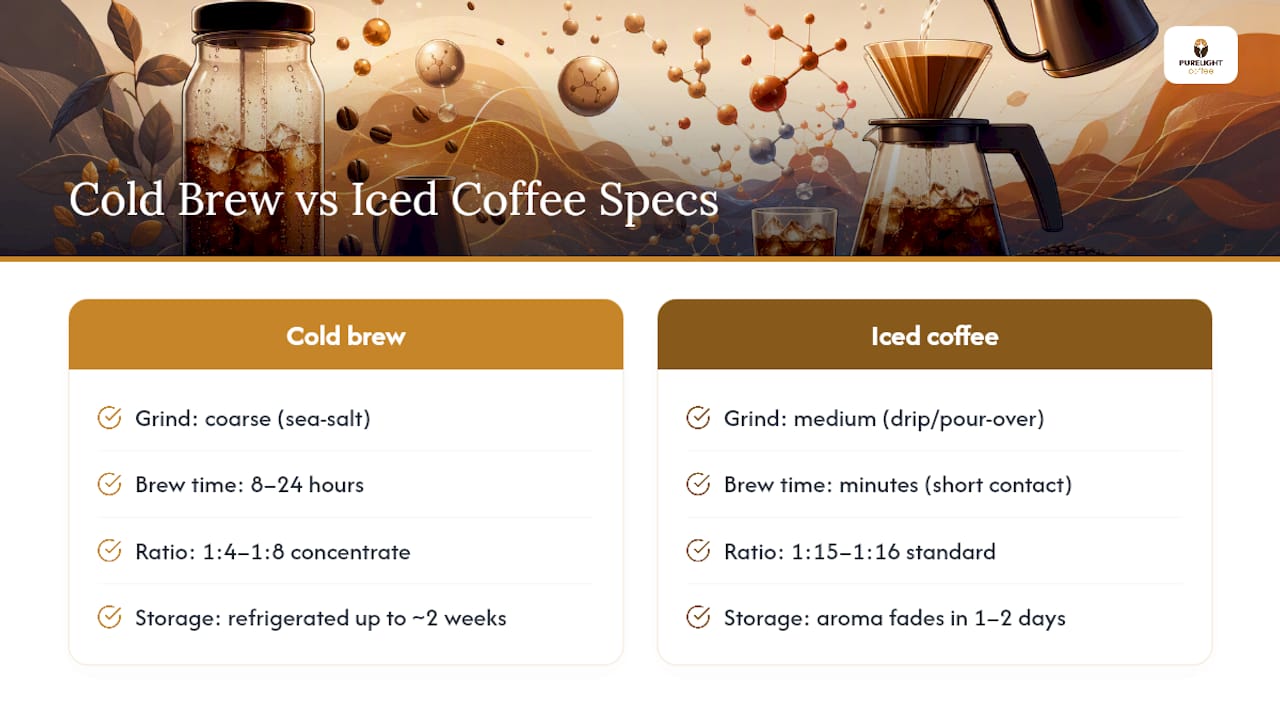
Storage timelines differ too. Refrigerated cold-brew concentrate holds its flavor for up to about two weeks, while cooled hot-brewed coffee starts losing aroma and turning flat within a day or two. If you’re steeping cold brew for more than 12 hours, keep it in the refrigerator rather than on the counter. Refrigeration reduces microbial risk and keeps extraction more consistent than a room-temperature steep.
Caffeine comparisons get misleading fast. Cold brew doesn’t extract caffeine faster per gram of coffee, but because it’s brewed as a concentrated ratio, a full-strength serving before dilution often carries more caffeine per ounce than a cup of drip coffee. Dilute it 1:1 and the numbers even back out closer to a normal cup.
Pro Tip: If you’re chasing a specific caffeine level, measure by dose (grams of coffee used) rather than by comparing “a glass of cold brew” to “a glass of iced coffee.” The serving size, not the method, usually explains the caffeine swing.
Cost and equipment favor iced coffee for speed, since you need nothing but your normal brewer and some ice. Cold brew asks for more patience and a pitcher or dedicated cold-brew maker, but rewards you with a batch that lasts.
How to Make Cold Brew Concentrate and Fast Iced Coffee
Both recipes take under ten minutes of active work. The difference is what happens after you walk away.
Cold brew concentrate:
- Coarse-grind coffee at a 1:5 ratio, roughly 100 grams of coffee to 500 grams of cold water for a solid pitcher batch.
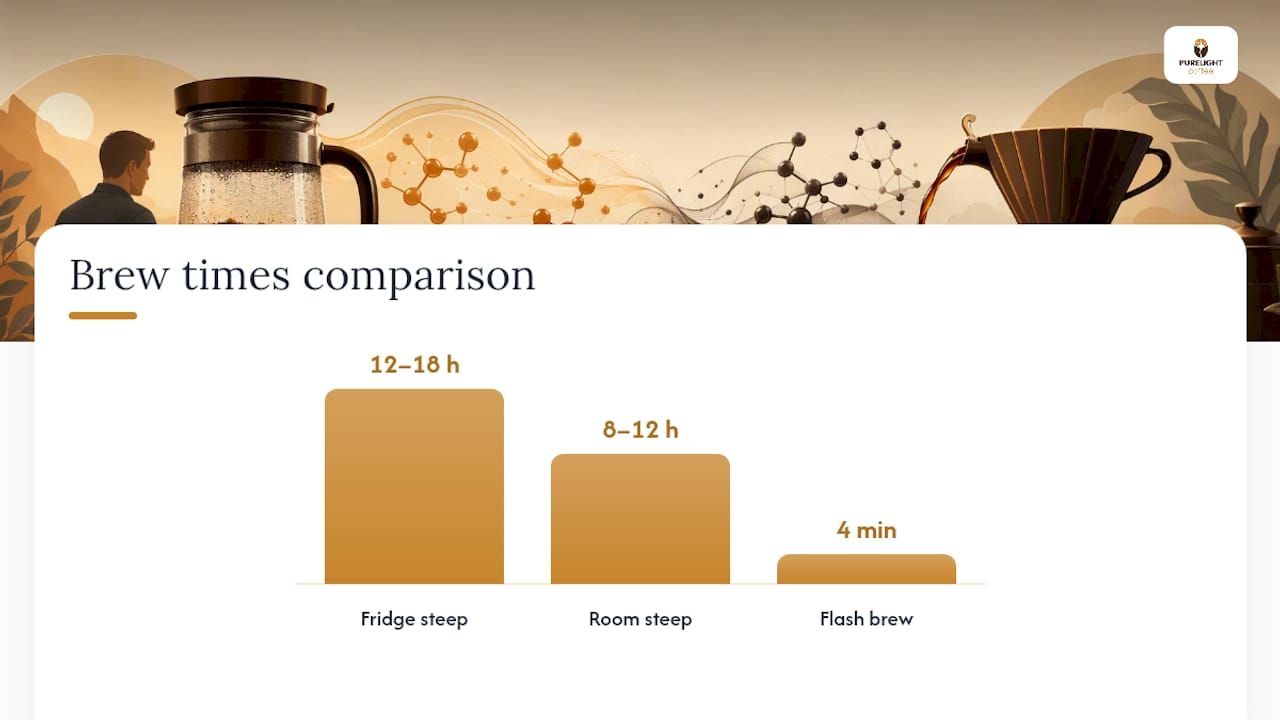
- Stir to make sure all the grounds are saturated, then cover and steep in the refrigerator for 12 to 18 hours (room temperature works in 8 to 12 hours but carries more variability).
- Strain through a coffee filter or fine mesh, then strain a second time if you want a cleaner cup with less sediment.
- Dilute the concentrate 1:1 with water or milk over ice for a standard-strength serving. Try 1:2 if you want it lighter.
- Store the undiluted concentrate refrigerated and use it within two weeks.
Flash-brewed iced coffee:
- Brew directly onto a full glass of ice, using roughly 25% more coffee than your normal hot ratio, since the ice will melt and dilute the final cup.
- Use a medium grind and a standard 4 minute pour-over or drip cycle.
- Serve immediately. Brewing onto ice, rather than brewing hot and adding ice later, prevents the watery dilution that ruins most homemade iced coffee.
Pro Tip: Freeze leftover brewed coffee into ice cubes. Regular ice waters down both drinks as it melts; coffee ice cubes keep the flavor intact to the last sip. For more ratio combinations across brew styles, our coffee brew ratio guide covers the math in more detail.
Choosing Beans and Roast Levels for Each Method
Roast level changes how forgiving a bean is to each brewing method. Light roasts hold onto more of their origin acidity and floral aromatics, which iced coffee showcases well since heat pulls those compounds out fast and ice locks in the brightness before it fades. Medium roasts split the difference and tend to work in either method without picking a side. Dark roasts already run lower in acidity from the roasting process itself, so cold brew’s acid-softening effect is less noticeable there, though the smoother body still comes through.
For a brighter cup, try the High Lakes light house blend with its fruit and citrus notes. Compare your flash-brew and cold-brew recipes at a similar serving strength. Its flavor description is not a verified low-acid result.
Freshness and storage affect the aroma you notice in iced coffee. Purelight works with a roasting partner in Bend, Oregon; our Shipping Policy separates production time from carrier transit. Our freshness guide explains roast information, storage and choosing an amount you will use.
A few habits protect either brew:
- Rinse your cold-brew vessel and filter between batches; residual oils turn rancid and sour the next steep.
- Keep cold brew refrigerated during any steep longer than 8 hours.
- Store beans in an airtight container away from light, and grind just before brewing whichever method you’re using.
The Quick Decision Rule
Try cold brew if you enjoy its flavor and want to prepare it ahead, or flash-brew over ice when you want a cup immediately. Do not treat a brewing method as a promise of relief from reflux. Our low-acid coffee guide explains the difference between a flavor description, an acidity measurement and a health claim.
What the Research Actually Tells Home Brewers
Most articles on this topic treat cold brew and iced coffee as a lifestyle choice, smooth versus bright, lazy Sunday versus busy Tuesday. That framing undersells what’s actually happening. The SCA and UC Davis data make a sharper point: chilling hot coffee and cold-brewing are not two paths to the same destination. They’re chemically different beverages that happen to share a serving temperature.
The overrated advice is dilution ratios. Every guide obsesses over 1:4 versus 1:8, but the roast level and grind consistency matter more to the final cup than a half point of ratio math. Get those two right first.
What I’d prioritize instead: match the bean to the method before worrying about steep time. A washed, lighter roast rewards flash brewing because it protects the acidity and aromatics that heat releases fast. A blend built for versatility, run through a coarse grind and a patient steep, is where cold brew earns its reputation for smoothness. The method should follow the bean’s strengths, not fight them.
— Shawn Lee
Try High Lakes for Either Brewing Method
Our High Lakes (Light House Blend) is built for exactly this kind of experiment. It’s a 12 oz bag for $22.95, and it holds up whether you’re flash-brewing it onto ice for a bright, fast cup or steeping it into a cold-brew concentrate for something rounder. Grab a bag of High Lakes and run both recipes side by side with the same beans. That’s the fastest way to actually taste the difference this article just walked through.
Sources
- How cold brew differs from chilled hot brew — Specialty Coffee Association / UC Davis summary
- Cold brew chemistry results (peer-reviewed lab data)
- Cold Brew vs Iced Coffee: The Real Difference — Coffee Studies
- Cold brew vs. iced coffee explanations and recipes — Serious Eats
Recommended
- Instant Coffee vs Brewed: Which One Fits Your Morning?
- Coffee Brew Ratio: Practical Ratios and Recipes to Try
- A Moka Pot Makes Espresso-Style Coffee Without the Machine
This article was produced by the Purelight Coffee team. It’s general coffee and brewing information, not professional or medical advice - results will vary with your equipment, water, and beans.


